A larger machine doesn’t automatically make a trenching project faster. A trencher that can’t fit through a side gate, reach the required depth, or handle compacted ground can leave a crew doing unnecessary hand work on a disrupted schedule.
At Calgrove Equipment Rentals, we help property owners, landscapers, and contractors compare equipment against the actual route, line type, and jobsite conditions. Our family-owned team brings more than 30 years of combined industry experience to equipment consultations for projects across Los Angeles and Ventura Counties.
Match the Machine to the Property
A walk-behind trencher is often the right fit for shorter runs, relatively shallow cuts, and properties where maneuvering space is limited. These compact machines can work in most landscaped areas, but they still need adequate clearance for turns, operator movement, and spoil placement (the excavated soil pulled from the trench).
For longer routes, deeper cuts, or demanding ground, a ride-on trencher provides greater traction and production capacity. It also has a larger footprint, so access through gates, around structures, near fences, and across finished surfaces needs careful review. Machine dimensions matter as much as cutting capacity.
Turf, hardscape, mature planting beds, slopes, and tightly spaced structures all affect where the machine can travel and where spoil can sit. Measure the narrowest access point, check overhead clearance, and confirm a delivery truck can reach the loading area before committing to a unit.
Read the Ground Before You Rent
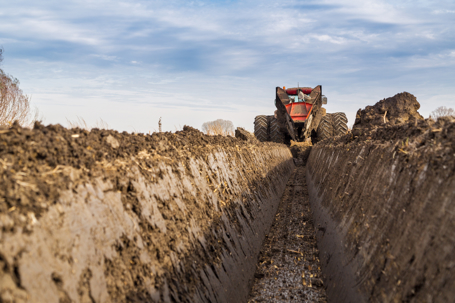
Ground conditions determine how efficiently a trencher cuts. Dry compacted soil, clay, roots, buried debris, and rocky material can all slow production, increase tooth wear, and change which machine makes sense. A route that looks open from the surface can still present difficult cutting conditions a few inches down.
A chain trencher cuts with a rotating boom-mounted chain fitted with teeth and works well for narrow, linear trenches. A rock wheel (sometimes called a trencher wheel) uses a large toothed wheel to cut through hard or rocky ground and can produce a more consistent trench width where a standard chain struggles.
Don’t choose the largest available machine just because the soil might be hard. Power, cutting configuration, required width, and material type all need to work together. A small test hole, where safe to dig, or a detailed conversation about visible rock, roots, and past excavation can reveal whether hand digging, a different attachment, a mini excavator, or another method fits the work better.
Locate Utilities Before You Dig
Before disturbing the ground anywhere in Los Angeles or Ventura County, contact 811 through DigAlert, Southern California’s regional notification center. California law requires advance notification so underground utility facilities can be located and marked before excavation begins. Review the markings and the planned route before bringing any trencher onto the site.
Utility markings don’t identify every line on private property. Private irrigation lines, landscape lighting, customer-owned electrical runs, water lines beyond the meter, gas lines serving site features, and communication wiring may all need separate investigation. Ask the property owner about previous work, visible valve boxes, old plans, and known connections.
Use hand digging around marked facilities, crossings, service connections, and other sensitive locations. Planning those sections separately can prevent a straightforward run from turning into a repair project.
Build a Rental Period That Covers the Full Scope
The rental period needs to account for more than the digging itself. Utility marking, route layout, equipment delivery, setup, pipe or conduit placement, inspection, backfilling, cleanup, and return all take time. Soil conditions and access can add meaningful hours even on a short route.
A daily term may fit a one-day irrigation repair or a short installation with no scheduling complications. A weekly rental makes more sense when crew availability, utility locating, material delivery, or staged work spreads the project across several days. Monthly terms suit ongoing construction or landscape work with repeated trenching needs.
We offer daily, weekly, and monthly rental options, plus delivery and pickup throughout Los Angeles County. Before reserving equipment, ask about the unit’s dimensions, transport requirements, operating controls, available cutting configurations, and what support looks like if site conditions change after work begins.
What to Have Ready Before You Call
A useful rental recommendation depends on details that are easy to gather in advance. Have the following ready:
- Project Address: Include the work area and any delivery or access constraints.
- Line Type: Identify irrigation pipe, water line, electrical conduit, communication cable, drainage, or another installation.
- Trench Dimensions: Provide the required depth, width, and total footage.
- Route Conditions: Describe slopes, gates, fences, buildings, finished landscaping, roots, rock, and compacted soil.
- Access Measurements: Measure the narrowest gate, path, or opening the machine must pass through.
- Locate Status: Confirm whether DigAlert markings are complete and identify known private lines.
- Rental Dates: Share the preferred start date, expected work duration, and any delivery or pickup needs.
The right unit is the one that reaches the needed depth and width, fits the property, and works within the project schedule. Not necessarily the one with the largest capacity.
The Right Trencher Fits Every Part of the Job
Footage is only one part of the planning equation. The line being installed, soil conditions, utility safety, property access, and time needed for restoration all shape the equipment decision. Working through those factors before delivery keeps the project organized and limits costly changes once work is underway.
For project-specific guidance and trencher rental arrangements in Los Angeles or Ventura County, talk with our team at Calgrove Equipment Rentals or call us at (818) 805-1617.